Choose shapes for the dough, not just the photograph
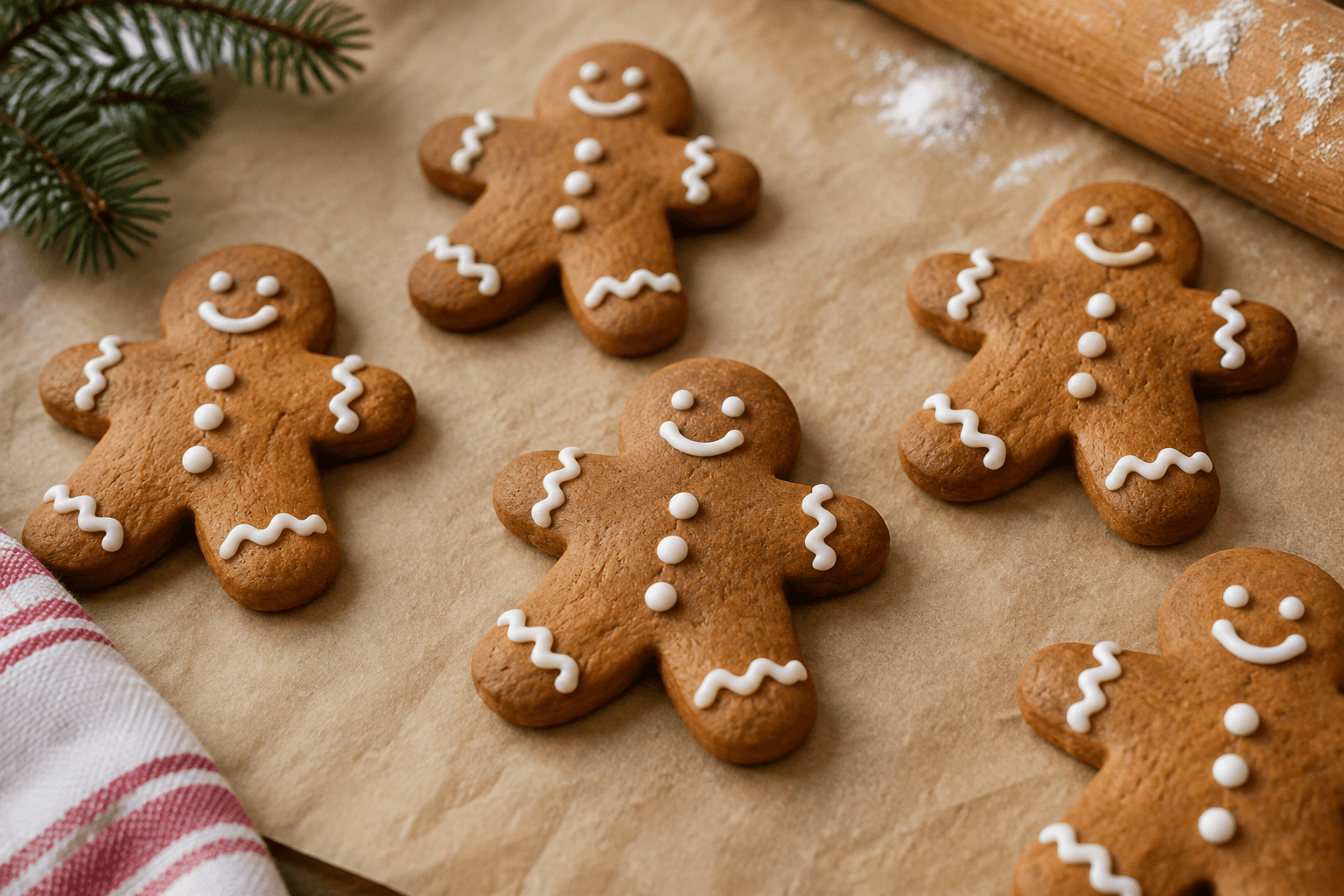
Very narrow limbs and intricate points can be difficult to transfer and easy to overbake. For a first gingerbread project, choose a clear outline with generous connecting sections. A star, a simple tree, and a person can cover a festive tray without requiring a large collection. This guide gives buying criteria rather than tested brand recommendations.
Check dimensions and cutting depth
Product photos can disguise scale. Read the finished width and height, then compare them with the cookie size in your recipe. A deeper cutter clears thicker dough and provides room for your fingers. Very large shapes yield fewer cookies and may need different bake times; they are not a direct replacement for a three-inch cutter.
Consider handling and care
Metal often gives a thin cutting edge, but material and construction vary. Look for a comfortable top edge and follow the manufacturer’s washing and drying instructions to avoid corrosion. Plastic can be easier for some hands to grip, though a thicker cutting edge may leave a less crisp outline. Avoid sharp edges or loose joins.
Try a shape you already have
A food-safe round cutter or an appropriately sized drinking glass can make simple rounds; do not use fragile glass or press hard. You can decorate rounds as pumpkins or ornaments rather than buying a shape for every occasion. Add a specialist cutter only when the design and frequency of use justify storing it.