What makes it “short”?
In baking, short describes a tender, crumbly texture, not a biscuit’s height or length. Fat coats flour particles and limits the development of an elastic gluten network. Shortbread’s generous butter content makes it a delicious illustration of the word.
A Scottish association, not a single origin moment
Shortbread is closely associated with Scotland, where it became a celebratory bake for holidays and hospitality. Accounts often connect it to earlier twice-baked bread traditions. The precise path from those breads to modern butter-rich shortbread is harder to pin down than a tidy origin story suggests.
Fingers, rounds, and petticoat tails
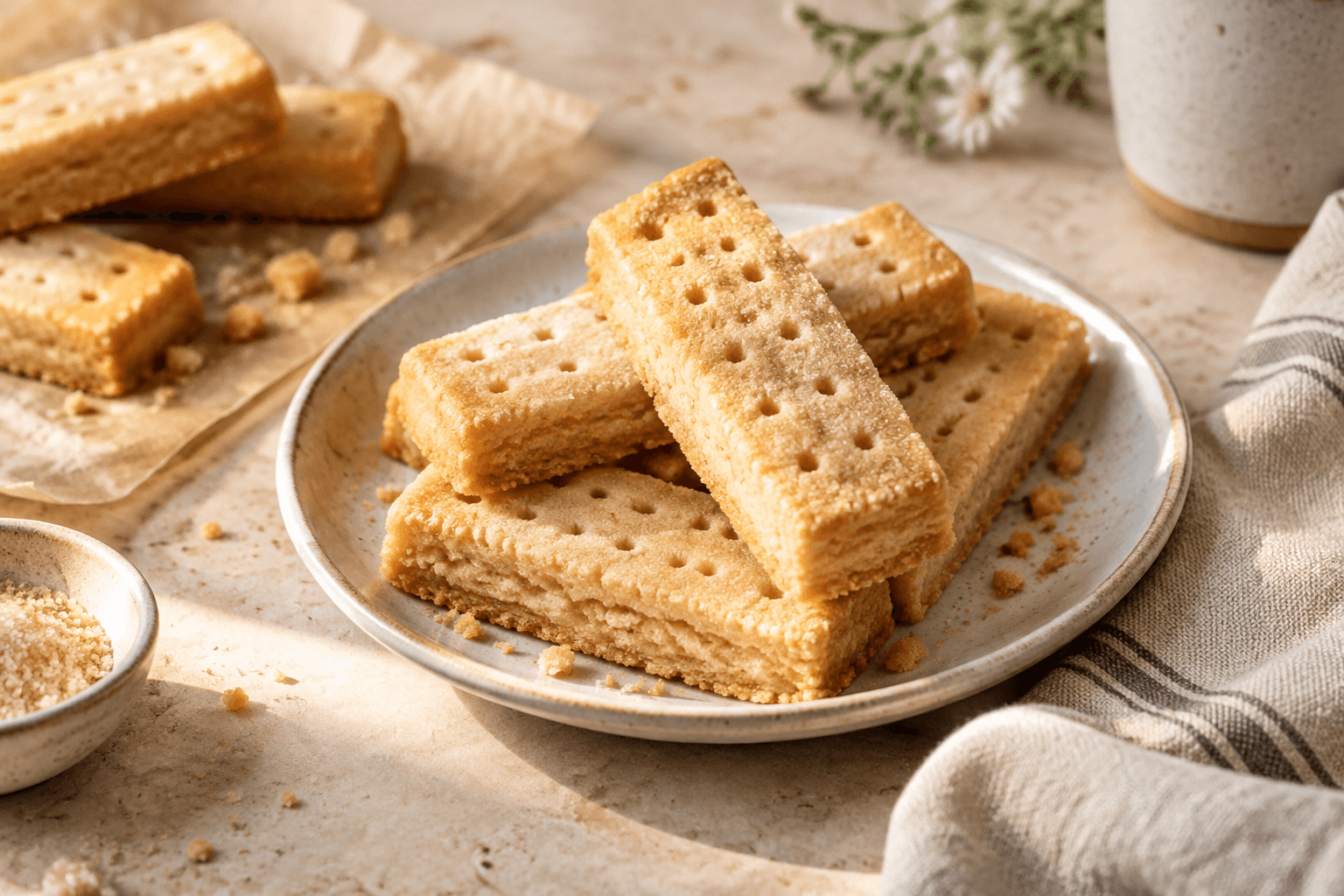
The same basic dough appears in several familiar forms: rectangular fingers, individual rounds, and wedges cut from a larger circle. Those wedges are often called petticoat tails. Explanations for that name vary, so it is better treated as a traditional name than evidence of one definitive historical event.
A recipe that travels well
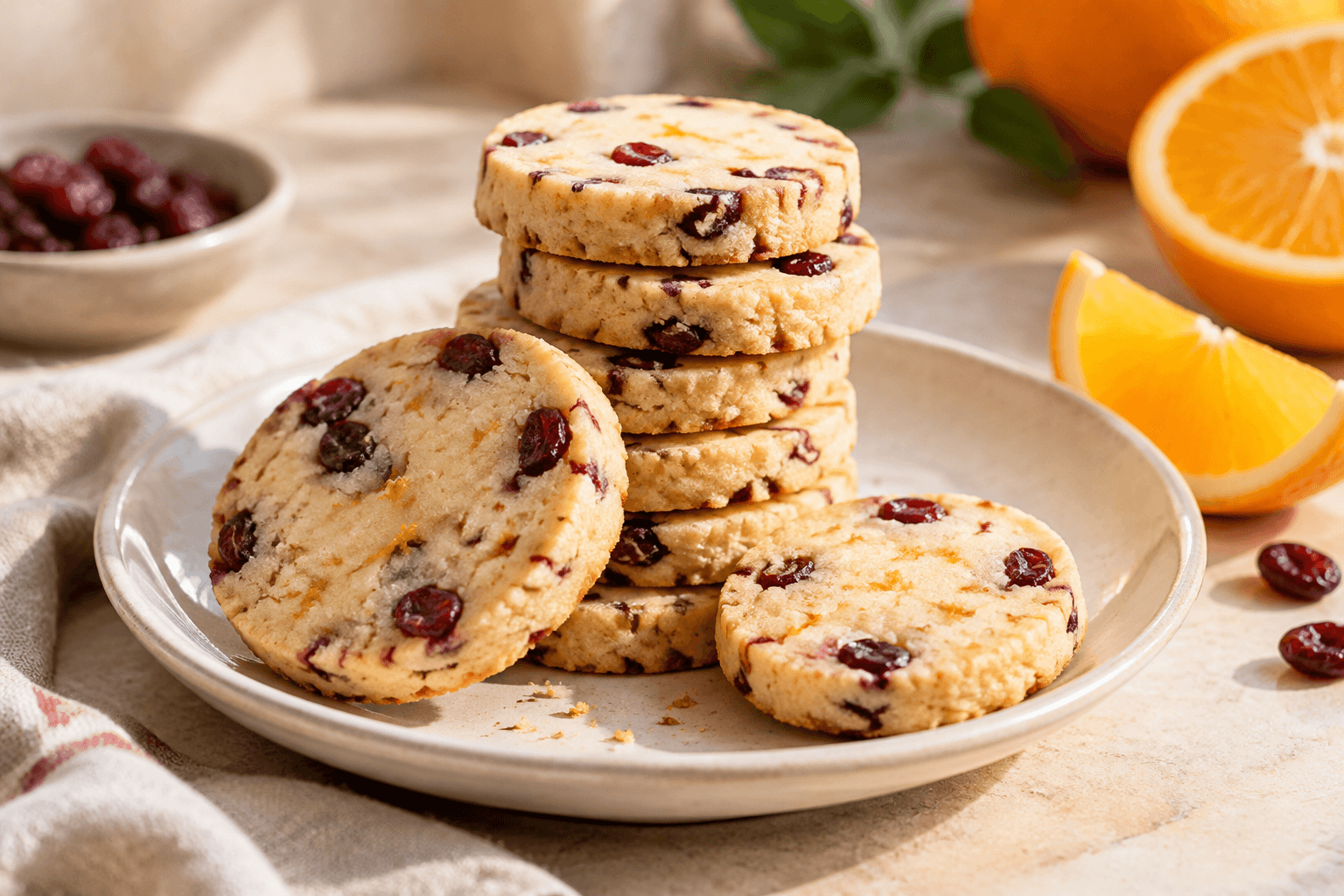
A simple ingredient list and a relatively dry crumb helped make shortbread a natural gift and tin biscuit. Modern versions add citrus, chocolate, or spices, but plain butter shortbread still makes the clearest case for restraint. Good butter and patient, gentle baking do most of the work.
Make a little tradition of your own
Try the simple shortbread recipe in our collection and cut it into fingers while warm. Share it once fully cool, when the crumb has settled. The best part of a food tradition is not only where it came from, but the ordinary occasions it can become part of now.